Eden Berger · 3 November 2026
Avian foraging patterns reshaping light diffusion in secluded rural water depressions
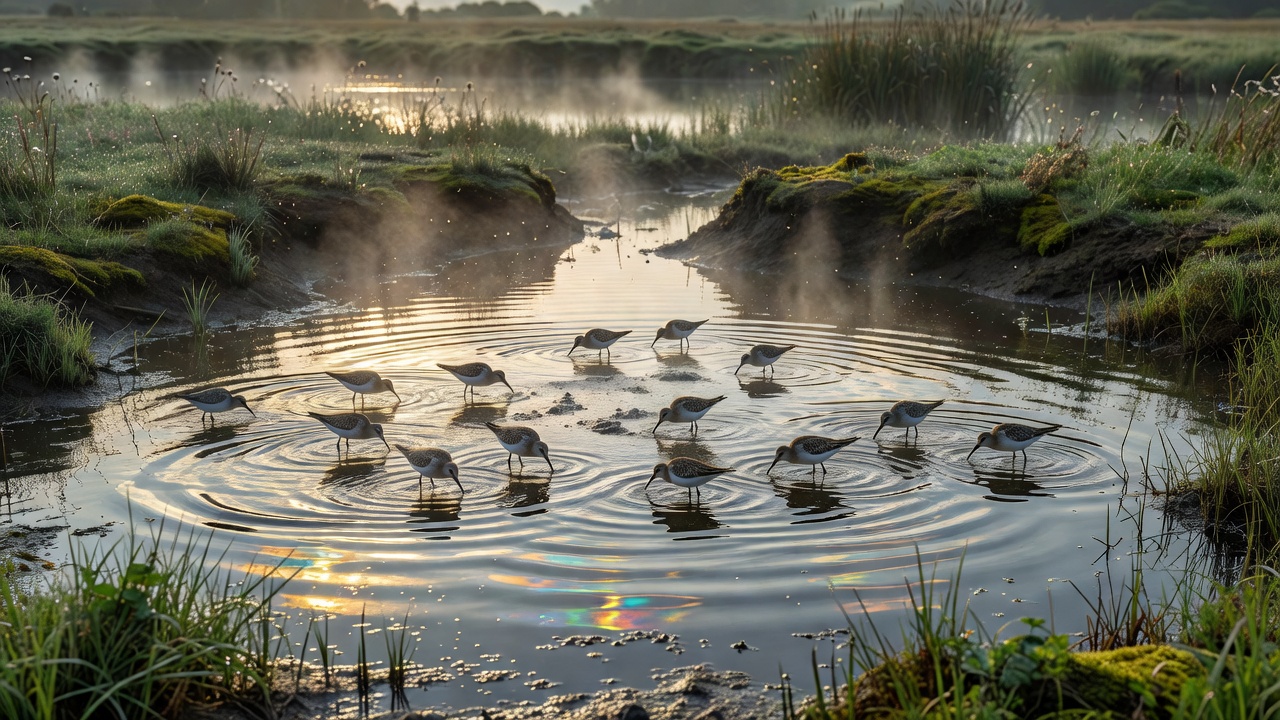
Avian species that frequent small rural water bodies engage in foraging activities that stir sediments, consume aquatic vegetation, and redistribute nutrients, all of which modify how light penetrates and scatters within these depressions, while seasonal patterns in bird movement influence the timing and extent of these changes across isolated pools.
Common avian species and their presence in rural depressions
Waterfowl such as mallards and teal, along with wading birds including herons and egrets, regularly visit secluded countryside water features where they probe mud, dabble at the surface, and pluck submerged plants, and these actions occur most intensely during migration periods when flocks concentrate in areas with reliable moisture even as surrounding landscapes dry out.
Foraging mechanics that alter water composition
When ducks upend and paddle they resuspend fine particles from the bottom, which increases turbidity and changes particle size distribution, whereas herons that stand and strike create localized currents that mix layers of water differing in dissolved organic matter, and both behaviors reduce the clarity that would otherwise allow light to travel deeper before absorption or scattering occurs.
Researchers tracking these interactions note that repeated visits by the same groups of birds prevent sediment from settling fully, which maintains a steady supply of suspended matter that interacts with incoming sunlight, and data collected over multiple seasons show consistent correlations between bird density and measured light attenuation coefficients in these small basins.
Light diffusion processes inside confined water bodies
Light entering a rural depression encounters water molecules, dissolved compounds, and suspended solids whose combined effects determine the path and intensity of photons, and when foraging increases particle load the proportion of scattered light rises while the depth of penetration drops, creating conditions where shorter wavelengths reflect more readily near the surface and longer wavelengths absorb faster in deeper zones.
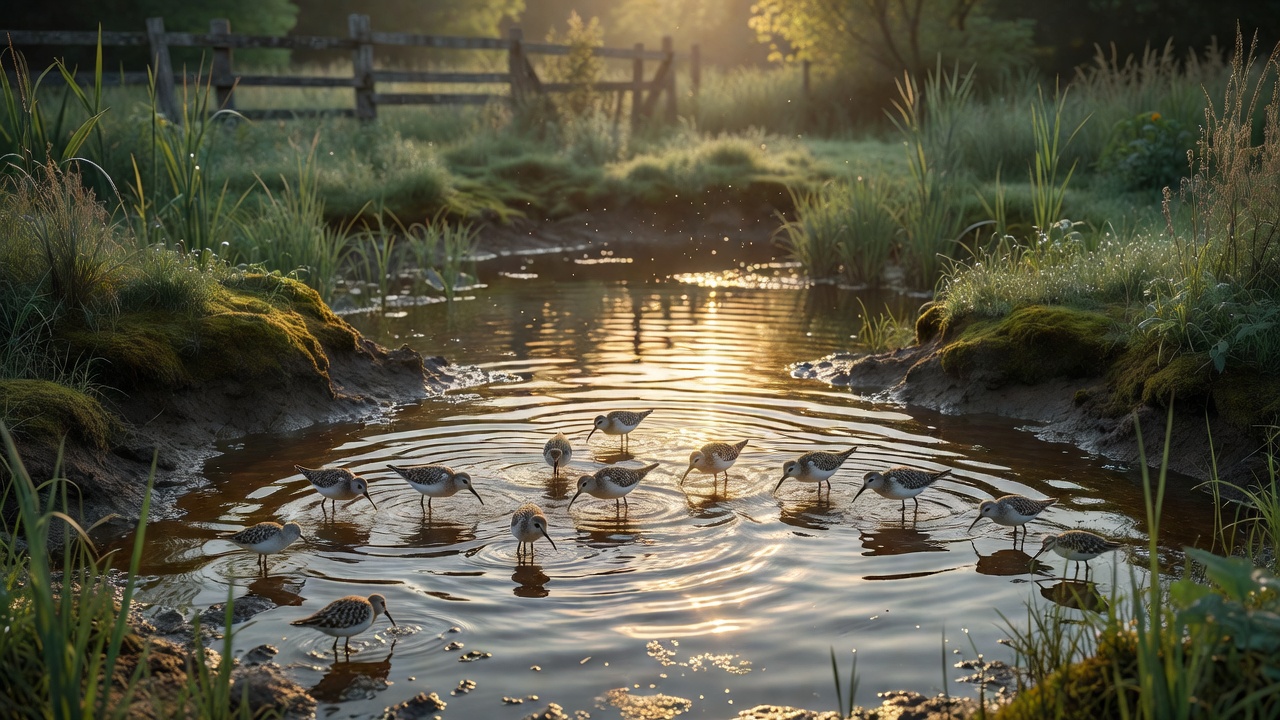
Studies conducted by Environment and Climate Change Canada have documented how these optical shifts vary with water depth and organic content, and the same reports indicate that even modest increases in turbidity from avian activity can alter the spectral quality reaching the substrate where algae and invertebrates reside.
Seasonal timing and observations around November 2026
Field records compiled through late 2026 show that fall migration brings larger numbers of dabbling ducks to depressions that retain water after summer drawdown, and measurements taken during November of that year revealed elevated turbidity levels coinciding with peak bird counts, while light sensors placed at multiple depths recorded reduced transmission compared with earlier months when fewer birds were present.
Observers working with university teams in similar settings across different continents report parallel patterns, confirming that the relationship between foraging pressure and optical properties holds across varied climates and vegetation types.
Nutrient redistribution and its optical consequences
Birds deposit feces and disturb buried nutrients during foraging, which fuels microbial growth that further contributes to suspended biomass, and this feedback loop sustains higher particle concentrations that continue to scatter light even after birds depart, according to long-term monitoring data gathered by the Australian Department of Climate Change, Energy, the Environment and Water in comparable wetland systems.
The resulting color shifts in the water column, often toward warmer tones, stem directly from the balance of scattering and absorption modified by these inputs, rather than from external runoff alone.
Conclusion
Avian foraging therefore functions as a biological driver that continuously reshapes light behavior inside secluded rural water depressions through mechanical disturbance, nutrient cycling, and seasonal concentration of activity, and ongoing measurements confirm that these patterns produce measurable differences in water optics that researchers can track across years and regions.