Eden Berger · 8 September 2026
Geological Influences on Coloration Patterns in Small-Scale Aquatic Systems
Geological formations around small-scale aquatic systems shape water coloration through mineral leaching, sediment transport, and chemical interactions that occur over time, researchers note in multiple field studies conducted across varied terrains. Bedrock composition releases ions such as iron, manganese, and calcium into surrounding water bodies, and these elements combine with organic matter to produce hues ranging from amber to deep blue-green depending on concentration levels and light penetration. Observers have documented how erosion from specific rock types alters turbidity, which in turn scatters wavelengths differently and creates the visual patterns seen in ponds and shallow lakes.
Mineral Contributions from Surrounding Bedrock
Granite and basalt exposures contribute distinct mineral profiles that affect small aquatic environments, data from geological surveys indicate, because weathering processes release silica and trace metals at measurable rates during seasonal runoff events. Iron oxides from these sources often tint water reddish-brown when oxidation occurs, while manganese compounds produce darker shades under low-oxygen conditions common in stratified ponds. Researchers who sampled sites in regions with volcanic geology found elevated levels of these compounds correlating directly with seasonal color shifts recorded over multi-year monitoring periods.
Carbonate-rich limestone areas generate higher alkalinity that stabilizes certain algae populations, and those populations then contribute green or turquoise tones through chlorophyll absorption patterns, according to reports compiled by the United States Geological Survey. In contrast, areas dominated by sandstone or shale tend toward clearer or tea-colored water because lower mineral solubility limits dissolved solids. One study revealed that pH fluctuations driven by geological buffering capacity further modulate how pigments from decaying vegetation interact with the water column, producing the layered coloration often visible at different depths.
Sediment Dynamics and Erosion Patterns
Seasonal erosion from surrounding slopes delivers fine particles that remain suspended and modify light transmission, experts observe in ongoing watershed analyses. Clay minerals from shale deposits create milky appearances during high-flow periods, yet settle to reveal underlying geological signatures once flows decrease. Data shows that particle size distribution, determined by parent rock material, controls how long these effects persist in small systems where water residence times allow extended interaction.
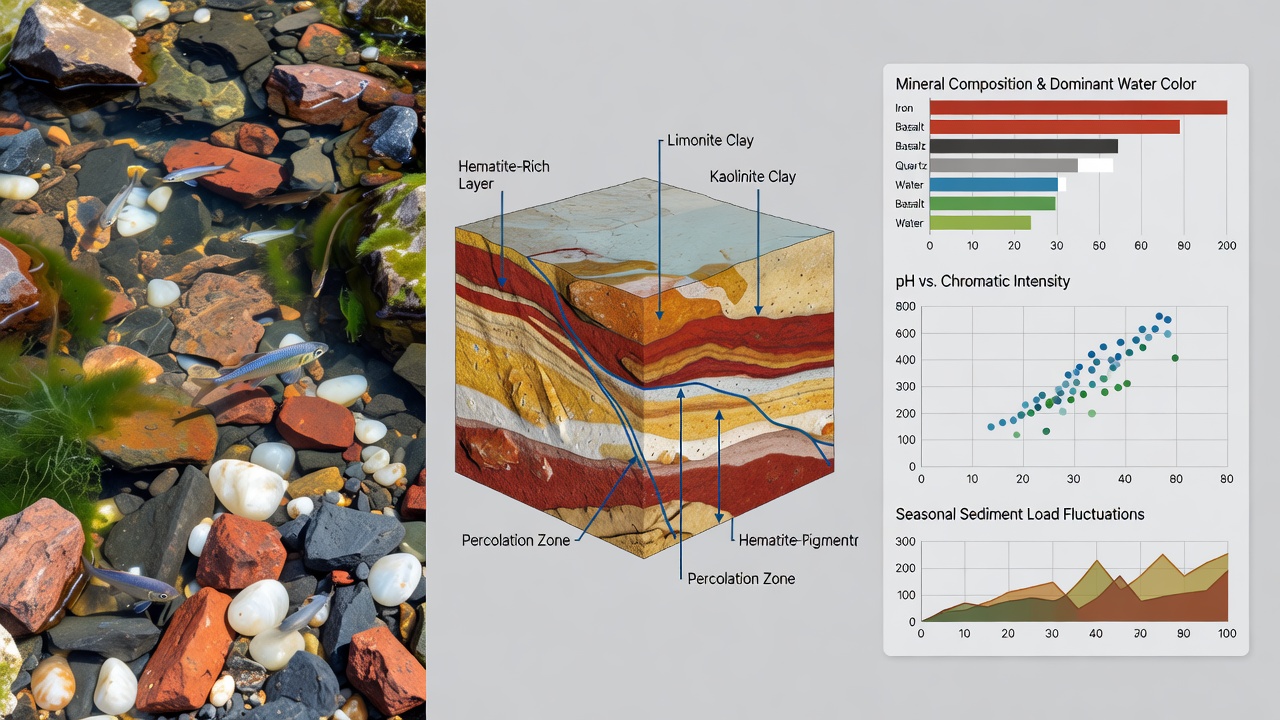
Glacial till deposits introduce mixed mineral suites that produce mottled or patchy coloration in affected water bodies, while alluvial fans from mountain streams carry distinct sediment loads that create gradients visible from shorelines. Those who've mapped these patterns note that tectonic activity can expose new rock faces, restarting mineral input cycles and refreshing color profiles in previously stable systems. Australian geological records document similar processes in arid-zone waterholes where infrequent rainfall events mobilize accumulated salts and oxides from exposed strata.
Regional Case Examples and Monitoring Data
Studies conducted in the Canadian Shield region demonstrate how Precambrian rock weathering produces characteristic tea-stained ponds through humic substances complexed with iron, with measurements taken during summer months showing consistent absorbance values tied to catchment geology. European Environment Agency reports on Alpine lake systems highlight how dolomite and schist combinations yield emerald tones under high ultraviolet exposure, patterns that shift with snowmelt timing and associated sediment pulses. Observers note these regional signatures remain detectable even when biological factors overlay them temporarily.
What's interesting is how groundwater seepage from different aquifers introduces additional variables, because deep geological structures influence dissolved gas content and redox conditions that alter metal speciation. Research indicates September 2026 monitoring campaigns will expand sensor networks to capture finer temporal resolution across multiple small-scale sites, building on existing datasets that already link bedrock age and mineralogy to observed color indices.
Interactions with Light and Seasonal Cycles
Light absorption and scattering depend on the specific mix of geologically derived solutes present, and field measurements confirm that shorter wavelengths attenuate faster in iron-rich waters while longer wavelengths penetrate deeper in clearer systems. Seasonal temperature changes affect solubility and precipitation rates of these compounds, leading to predictable color cycles documented in long-term observation programs. Those studying small systems find that wind-driven mixing redistributes settled sediments and reintroduces coloration effects during storm events.
Conclusion
Geological controls establish baseline coloration patterns in small-scale aquatic systems that biological and atmospheric factors then modify, evidence from multiple international monitoring efforts confirms. Continued data collection through expanded sensor arrays and targeted sampling will refine understanding of these interactions across diverse geological provinces. The relationships between bedrock type, erosion rates, and resulting water optics provide measurable frameworks for predicting color dynamics in contained water bodies worldwide.