Greta Simon · 22 September 2026
Seasonal Shifts in Organic Buildup Creating Unique Tints Across Isolated Rural Pools
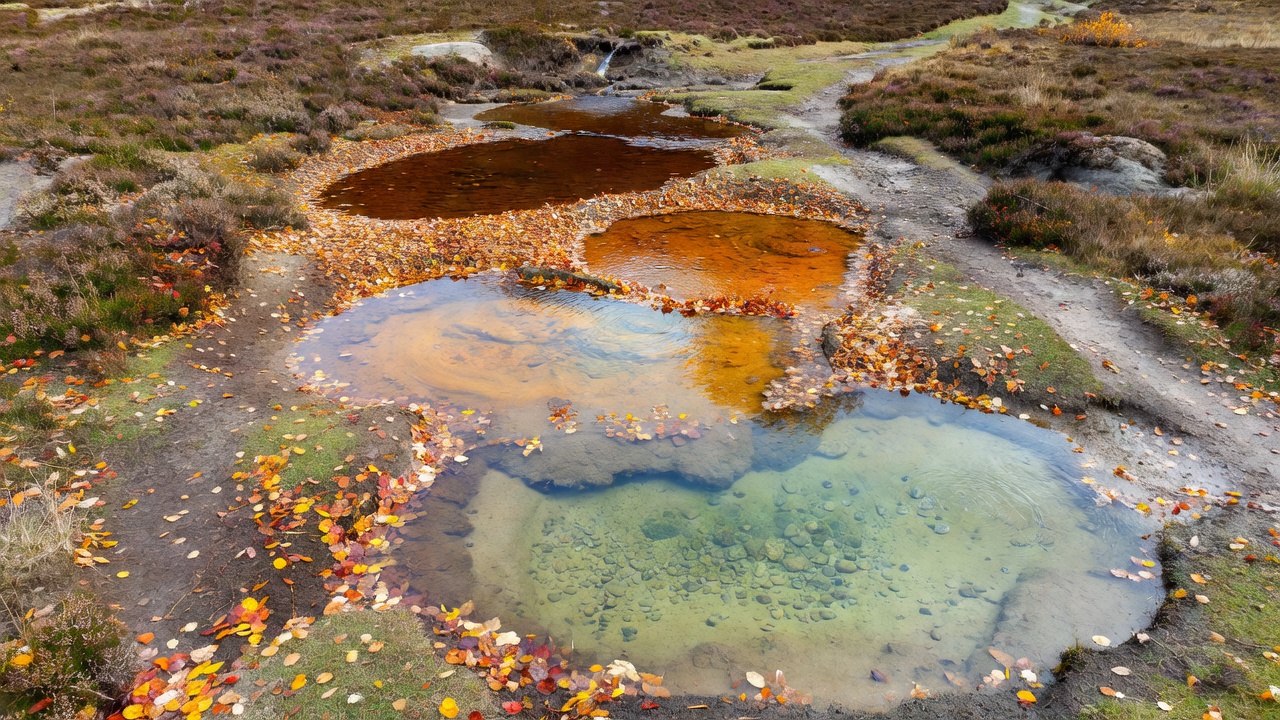
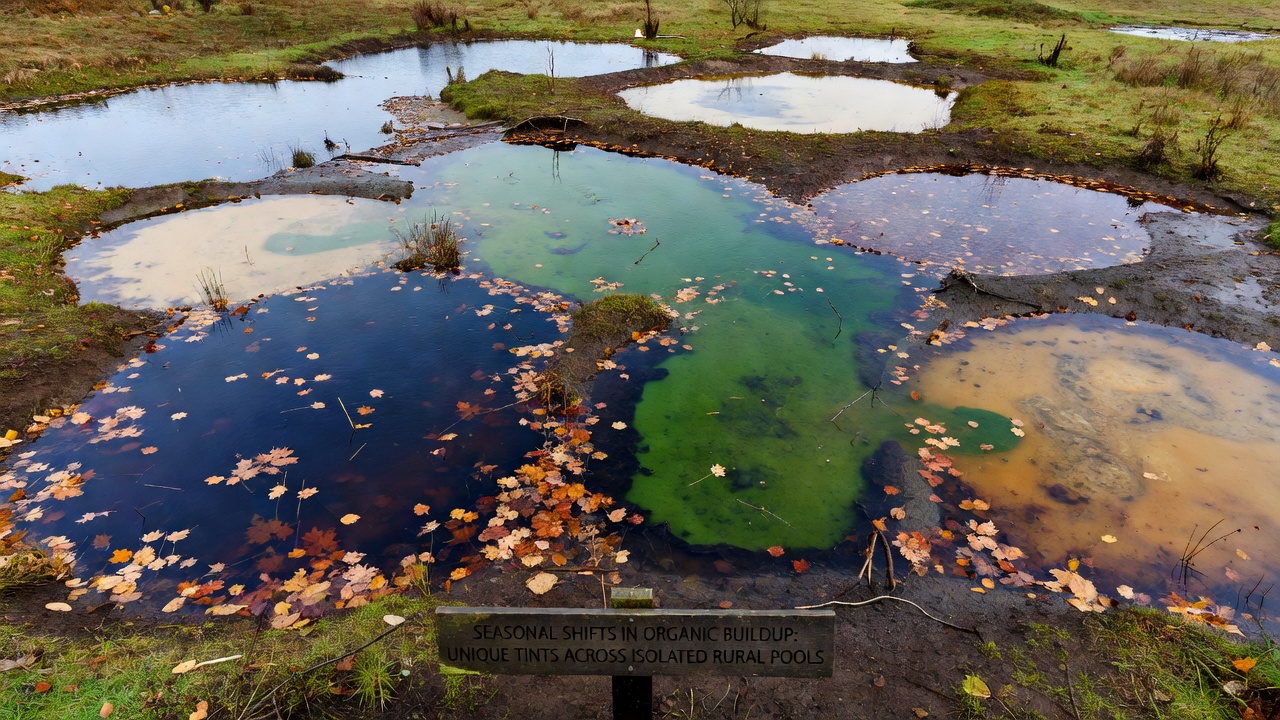
Isolated rural pools undergo noticeable color transformations each year as organic materials accumulate and break down in distinct patterns tied to temperature, rainfall, and vegetation cycles. These shifts produce tints ranging from clear greens in spring to deeper ambers and browns by late summer and fall, driven primarily by leaf litter, algal blooms, and microbial activity rather than external pollution sources. Observers note that such changes remain most pronounced in ponds separated from flowing streams, where water exchange stays minimal and local inputs dominate the chemical makeup.
Organic Matter Inputs Through Changing Seasons
Leaves from surrounding trees and shrubs fall into these pools during autumn, releasing tannins and lignins that react with sunlight and dissolved oxygen to create yellowish-brown hues. Researchers from the US Environmental Protection Agency have tracked how deciduous inputs peak between September and November, with decomposition rates slowing as temperatures drop. In September 2026, monitoring stations across the Midwest recorded elevated dissolved organic carbon levels in dozens of such pools following an extended dry spell that concentrated existing material.
Spring brings fresh growth around pool edges, where grasses and sedges contribute proteins and carbohydrates that fuel early algal populations. These organisms tint the water emerald or olive green until nutrient supplies taper off. Summer heat accelerates bacterial breakdown of accumulated material, often shifting colors toward olive-brown while increasing humic acid concentrations. Winter ice cover slows visible changes yet allows anaerobic processes to continue beneath the surface, preparing darker tones for the following thaw.
Geographic and Climatic Influences on Tint Variation
Regional differences emerge clearly when comparing pools in forested areas versus those bordered by agricultural fields. Forested sites receive higher loads of woody debris and conifer needles, producing more persistent tea-colored water, whereas farm-adjacent pools show greener tones from fertilizer runoff that stimulates phytoplankton. Data collected by Environment Canada across Ontario and Quebec indicate that precipitation totals above 800 millimeters annually correlate with faster color cycling and greater seasonal contrast.
Temperature swings further modulate these patterns. Warm spells in late spring promote rapid algal growth that can mask earlier brown tints within days, while cooler autumn nights slow microbial activity and allow tannins to accumulate without rapid oxidation. One study from the Commonwealth Scientific and Industrial Research Organisation in Australia documented similar cycles in ephemeral farm dams, where organic buildup created measurable absorbance shifts at 440 nanometers between March and September each year.
Microbial and Chemical Processes Behind the Colors
Bacteria and fungi decompose plant material into humic and fulvic acids that absorb specific wavelengths of light, generating the characteristic amber and brown shades. Iron and manganese ions present in surrounding soils interact with these acids to intensify darker tones, particularly after heavy autumn rains stir up bottom sediments. In pools with clay-rich basins, suspended particles add a milky cast that combines with organic tints to produce olive-gray mixtures during turnover events.
Algal species composition also shifts with seasons, moving from diatoms dominant in cooler months to green algae and cyanobacteria as waters warm. These organisms contribute chlorophyll and carotenoids that create transient green or yellowish overlays before decaying and releasing additional organic compounds. Measurements taken in isolated Vermont pools showed chlorophyll-a concentrations rising from 2 micrograms per liter in April to over 15 micrograms per liter by July, directly tracking visible color intensification.
Long-Term Patterns and Monitoring Approaches
Repeated observations across multiple years reveal that extreme weather events accelerate or dampen normal tint cycles. Droughts concentrate existing organics and deepen colors, while heavy flooding events dilute them temporarily before new inputs arrive. Satellite imagery combined with ground sampling now allows researchers to map these changes across broader landscapes without constant site visits.
Community science programs in several states encourage residents to photograph and log pool colors weekly, building datasets that complement professional sampling. These records help identify deviations from expected seasonal baselines, such as unusually early browning linked to invasive plant species or delayed greening after prolonged cold snaps.
Conclusion
Seasonal organic buildup continues to drive predictable yet locally variable color changes in isolated rural pools through well-documented inputs, decomposition pathways, and light absorption effects. Ongoing data collection from agencies and research groups provides the factual foundation for understanding these dynamics without reliance on anecdotal impressions alone. Patterns observed through 2026 align closely with earlier multi-year records, confirming the central role of climate and vegetation in shaping water appearance across these systems.